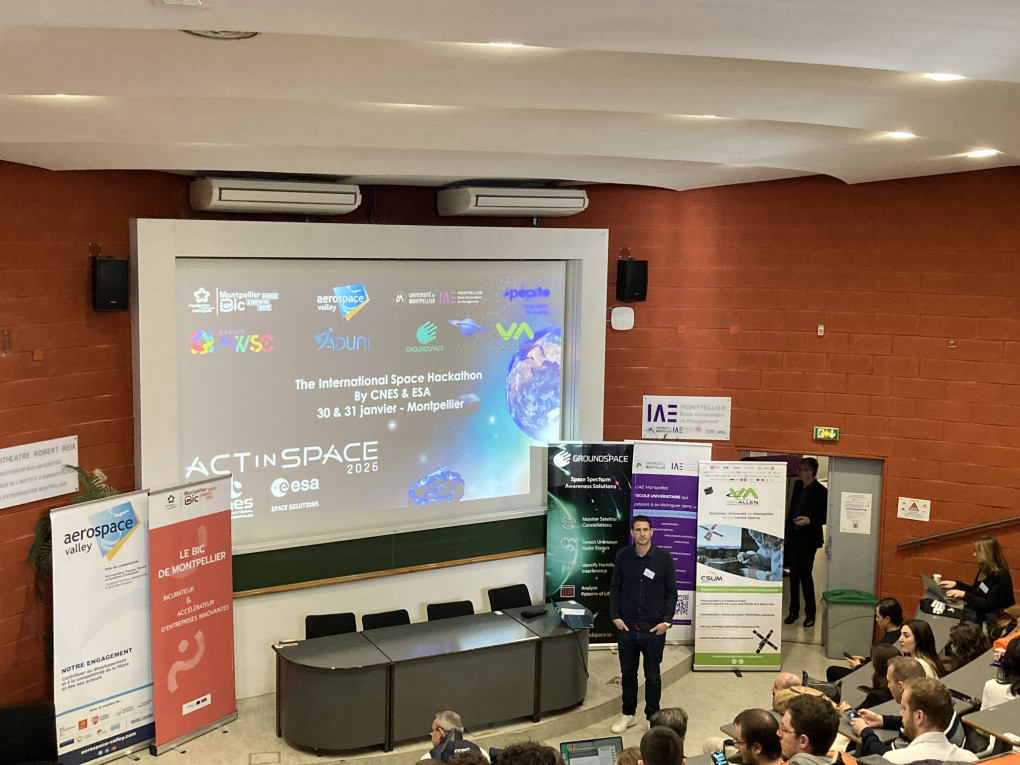
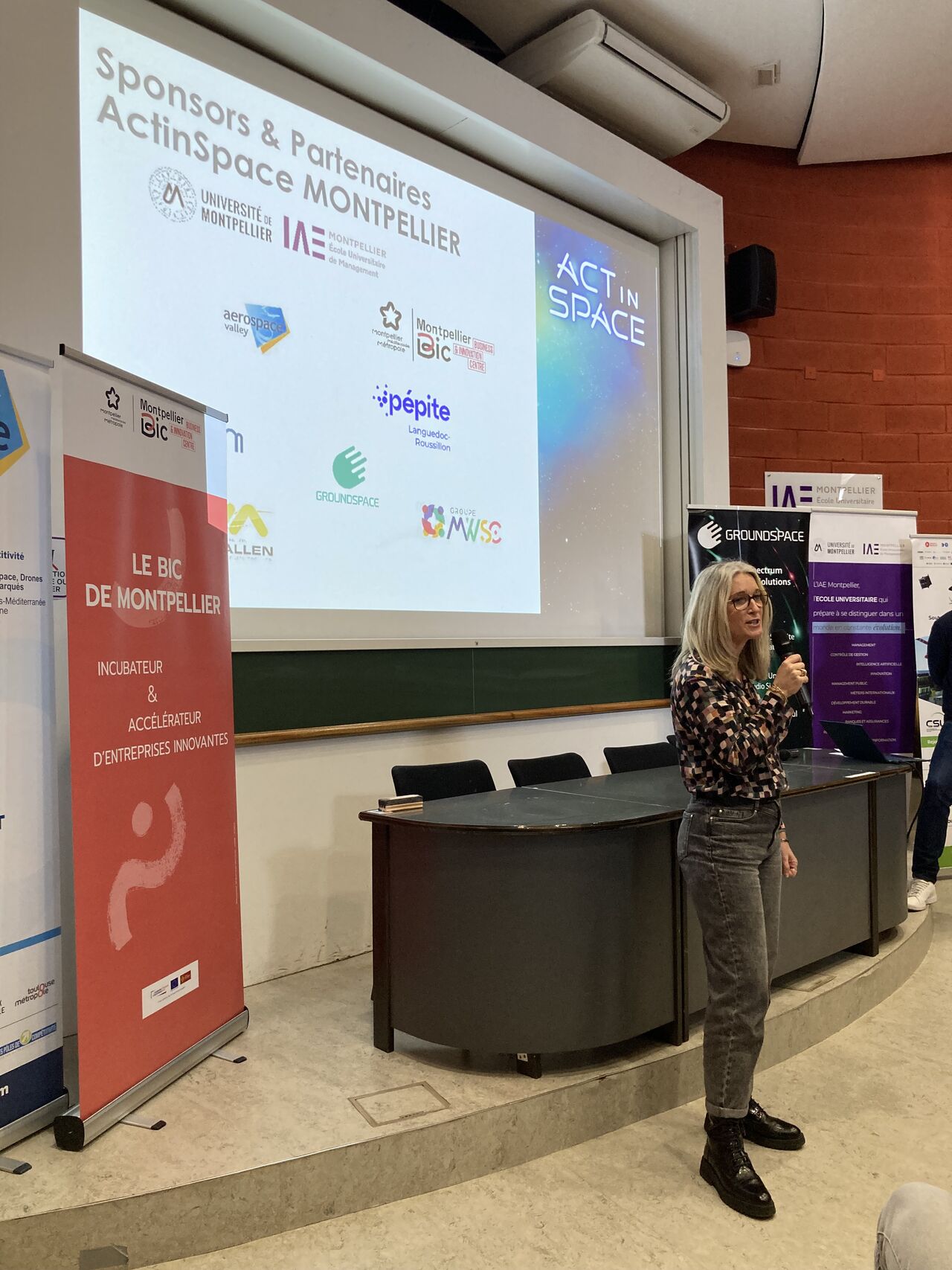
Participants are given 24 hours to develop a viable startup based on challenges to solve using patents from CNES and its partners. Montpellier hosted ActInSpace, an international hackathon dedicated to space innovation and entrepreneurial initiative, organized by CNES in partnership with the European Space Agency (ESA), co-organized locally with Montpellier BIC and Aerospace Valley, and partners including Groundspace, Van Allen Foundation, MWSC Group, Montpellier IAE, and Pépite LR.
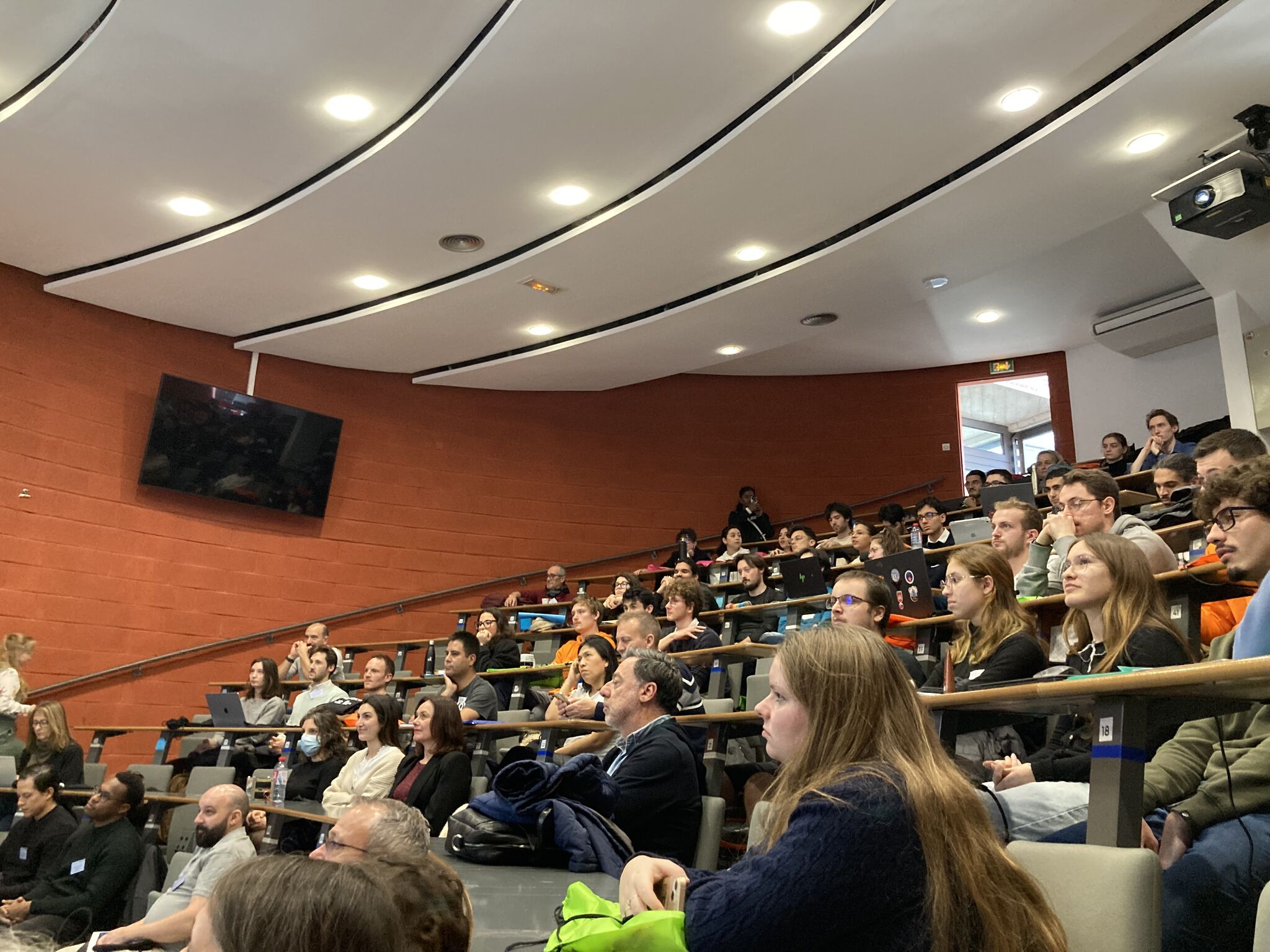
The 2026 edition brought together nearly 67 participants divided into 15 teams, in a relaxed but highly focused atmosphere. On January 30, starting at 2:15 p.m., each team got together to brainstorm, sketch, and work on different ideas together. Participants Bilal, Cyprien, Mathys, and Baptiste met in the first room.
“We didn’t know each other before this challenge, but we agreed on the same topic. I’m from the École des Mines d’Alès engineering school, and they are in preparatory classes. It’s also a chance to meet people and build a network,” Bilal points out. The new teammates thought about proposing data centers in orbit.
Elsewhere at the event, Yves, Maïlys, and Théo brainstormed a solution to compensate for overloaded networks in the event of a natural disaster. “By leveraging deployed antennas, this network could help firefighters and emergency responders to communicate regardless of the conditions. During the introduction, we saw that Groundspace was working on antennas, so we’ll be able to ask them for advice,” explains Yves.
A space ecosystem rapidly taking shape
ActInSpace takes place simultaneously in nearly 60 cities across 30 countries. Nearly 40 startups have been launched since the event’s creation. The 2022 edition brought together 1,800 participants and 410 teams. “The idea is to create a viable startup using freely accessible space patents, building a credible business model, and elaborating a technically realistic solution,” explains Frédéric Adragna, head of Connect by CNES, a support program for newcomers to the space sector.
In Montpellier, the event resonates particularly well in a region that is growing quickly. “Toulouse remains a major hub, but Montpellier is doing very well and has earned a rightful place in the space sector,” points out the CNES representative, noting the presence of players such as Groundspace, TeleScop, and Wheere, as well as the Montpellier University Space Center (CSUM), an academic leader in nanosatellites.
“ActInSpace is a powerful driver for startup creation”
Groundspace, a Montpellier-based startup specializing in satellite radio frequency spectrum monitoring, sponsors the event as part of the local support network.
“ActInSpace is close to our hearts because we went through it ourselves. It is a tremendous catalyst for startup creation and entrepreneurial spirit,” says Thibault Delorme, project manager at Groundspace, a startup working on the increasingly crowded orbital space.
Each team pitches its project at the end of the intensive 24-hour work session. The team that wins the Grand Prize will represent Montpellier at the national finals on April 1 in Bordeaux, where they will compete to become the French team for the international finals held on April 2, also in Bordeaux. The prize is a trip to French Guiana to witness a rocket launch and experience a zero-gravity flight.
Winners of the 2026 edition
Three prizes were awarded after the 24-hour creative challenge:
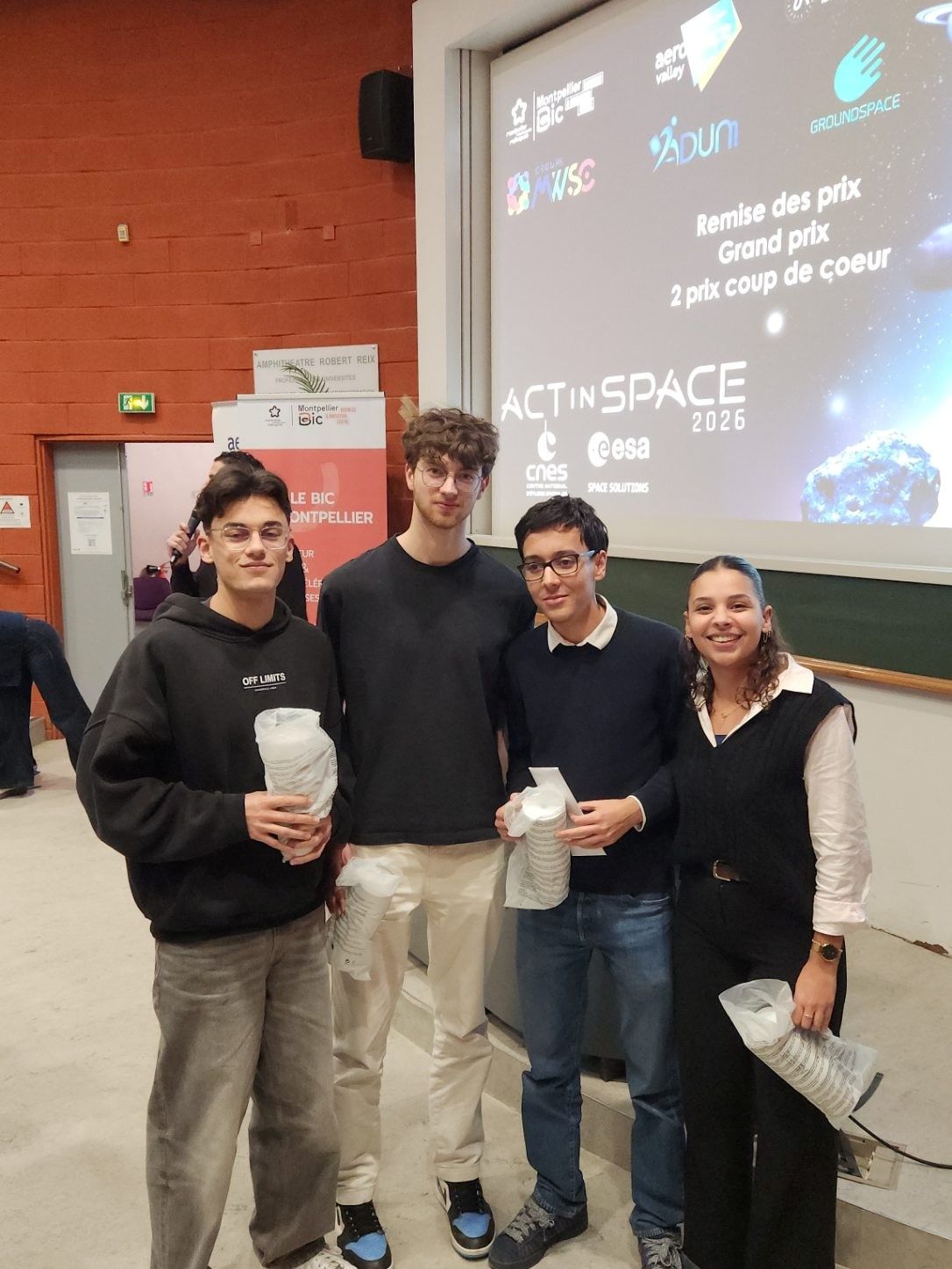
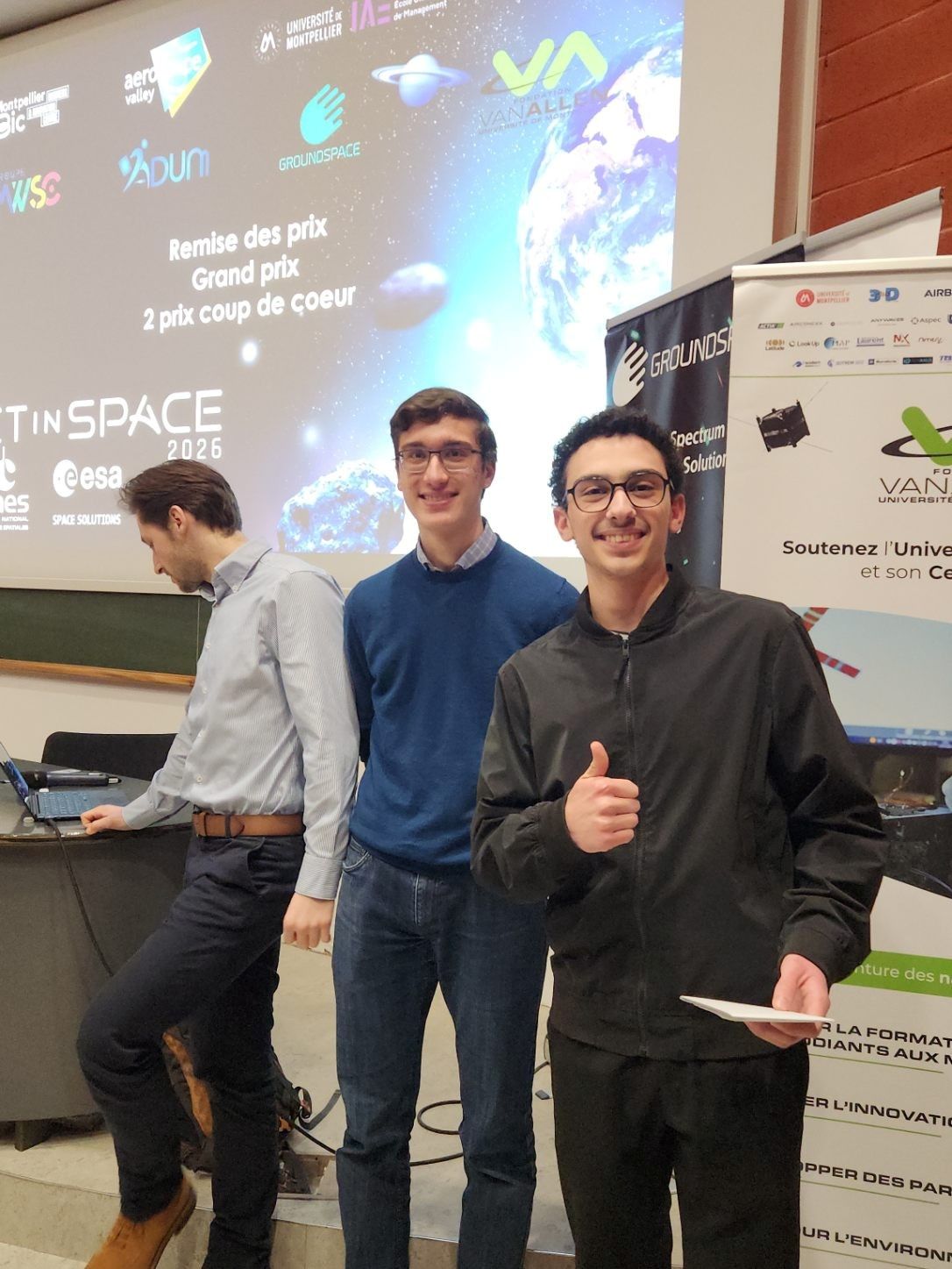
- The Jury’s Choice Award for the best pitch went to the SCS (Spatial Container Systems) Project. The team, comprised of Giovanni Sabatini and Marwan Derhouri (both students in the preparatory class at Polytech Montpellier), designed the first universal space container standard.
- The Jury’s Choice Award went to the Nexus&Space project. This team, comprised of first-year engineering students from Polytech Montpellier’s Microelectronics and Automation (MEA) program – Gibril Sahli, Ethan Huchet, Noëlie Azdad, and Aurélien Goumain – developed a “Plug & Play” standardization solution for satellites.
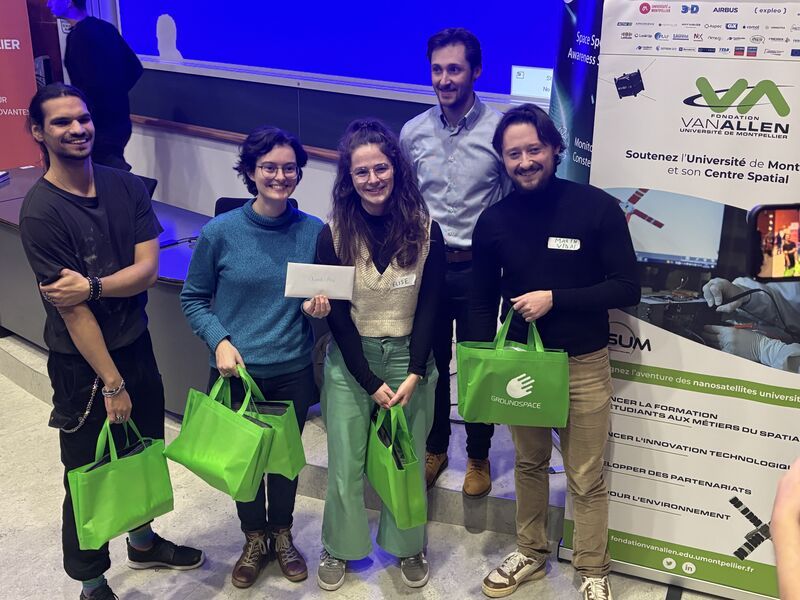
- The Grand Prize was won by the Curiosity team for their Amaltea project. Their proposal is to create a module that contains a complete ecosystem in a compact space designed to recycle crew waste (urine, feces, CO2) and convert it into clean water, oxygen, and a different types of of food for the duration of the space mission. This team consists of Patrizia Felicetta Russo, a PhD student in Analytical Chemistry at IBMM; Marin Vidal, a PhD student in Astrophysics at the LUPM lab; Camille Libourel, a PhD student in cosmology at the LUPM lab, Mady Querillacq (SNEE), a student in the Professional Bachelor’s program in Business Creation & Takeover; and Élise Dumas (SNEE), a student in communication.
 Photos ©3M