



Renewable energy, a sector with a bright future
- + 300major economic stakeholders
- 4,500local jobs
- +75%increase in photovoltaic-related jobs from 2021 to 2025
- +39%growth in photovoltaic solar energy jobs in Europe in 2022
- 50 M€in funds raised by Elements in 2023
- 122new renewable energy projects in the area in 2024
The Montpellier metropolitan area is one of the birthplaces of renewable energy. It possesses a powerful ecosystem covering all areas of expertise in the sector, from biomass, wood, and biofuels to biogas, wind power, marine energy, geothermal energy, green hydrogen, hydropower, heat pumps, solar photovoltaics, solar thermal energy, and thermodynamics.
The territory has attracted all of France's major players and is supported by a high-level scientific foundation centered around University of Montpellier, local engineering schools and research centers, and the Derbi-Cemater and Mer Méditerranée competitiveness clusters.
Engaged in a proactive strategy for ecological and energy transition, Montpellier Métropole launched a renewable energy cluster in December 2024. This initiative is the result of a collaborative effort with all sector stakeholders.

The Montpellier metropolitan area, a strategic hub for renewable energy
-
The Montpellier area offers many natural advantages that position it at the center of the renewable energy sector:
- The Mediterranean climate, with 300 sunny days a year and consistent winds such as the Mistral, Tramontane, and Greek winds, has helped the Occitanie region emerge as France’s leading wind energy region and the second-largest region for solar energy after the Sud region (Provence-Alpes-Côte d'Azur).
- Its geographical location places it right at the heart of the Mediterranean arc, offering promising prospects for the development of floating wind turbines.
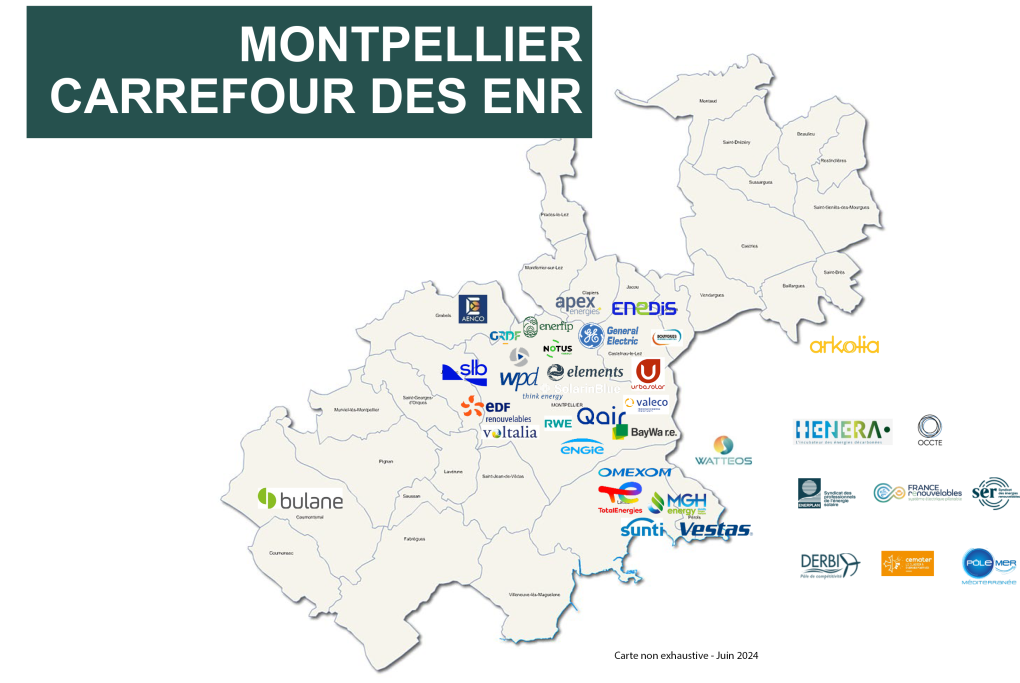
- This dynamic sector offers exceptional growth prospects and already includes more than 170 players locally, including major companies (including EDF Power Solutions, Engie Green, and TotalÉnergies Renouvelables), independent power producers, and equipment suppliers (including Elements, Urbasolar, Hyd’Occ, and Valeco), as well as ENERFIP, Europe’s leading crowdfunding platform for the energy transition.
-
With over 4,500 jobs already in the Montpellier area, the renewable energy sector is constantly looking for new talent to support its growth. The sector is undergoing exponential growth, with projections for job creation set to double or even triple in the coming years.
Montpellier Métropole mobilizes its partners (Occitanie Region, Regional Education Authority, France Travail, MEDEF, CCI, Renewable Energy Union, and others) to address employment and training issues, in order to consolidate the pool of sustainable and inclusive jobs — tailored to the skills the sector needs to grow.
Higher education institutions such as University of Montpellier Polytech and Paul-Valéry University also play a role in shaping local skills. Continuing education programs and support for the transformation of certain skilled trades are being promoted to address the new challenges of the energy transition.
A talented ecosystem
-
Among its approximately 300 renewable energy stakeholders, the Montpellier metropolitan area is home to more than 170 companies. This includes Apex Énergies, Aenco, GRDF, Enerfip, Grid Solutions (General Electric), Bouygues, SLB, WPD, EDF Power Solutions, SolarinBlue, Voltalia, RWE Renewables, Qair, Valeco, Engie Green, BayWa r.e., TotalÉnergies Renewables, and Vestas.
Two competitiveness clusters, Derbi-Cemater and Mer-Méditerranée, play a major role in bringing this network of companies together with all the other major players in the sector. Derbi-Cemater focuses on the energy transition, while Mer-Méditerranée focuses on marine energy, among other missions. Both clusters unite companies, research laboratories, and institutions to foster innovation that supports the energy transition.
Strongly committed to innovation related to the energy transition, University of Montpellier is a partner of both competitiveness clusters and, like Paul-Valéry Montpellier 3 University, is a member of the Montpellier Renewable Energy Cluster.
-
This ecosystem is further reinforced by the UNESCO ICIREWARD International Center for Water at University of Montpellier, helping to drive innovation by bridging the gap between research and experimentation, while also fostering the development of low-carbon projects.
Another key contributor is Montpellier BIC, ranked among the world’s top five public startup incubators. The incubator plays a vital role in the ecosystem’s development by assisting startups in the sector. Its well-known alumni include Urbasolar, Sereema, and Comwatt.
This talent pool of startups, represented as a group by French Tech Méditerranée, helps consolidate the area's innovative momentum.
A renewable energy cluster and bold initiatives
-
Montpellier Métropole established a cluster specifically dedicated to renewable energy.
Created in collaboration with all industry stakeholders operating locally, the cluster is divided into six working groups focused on three key themes: providing support for training and skills development to meet business needs; enhancing Montpellier’s attractiveness to talent and investors; and fostering innovation to develop solutions capable of addressing climate challenges. Co-chaired by industry experts, each working group manages four to six concrete actions, which began in 2025.
Based at the Halle de l’Innovation facility, the renewable energy cluster currently has over 40 signatories.
-
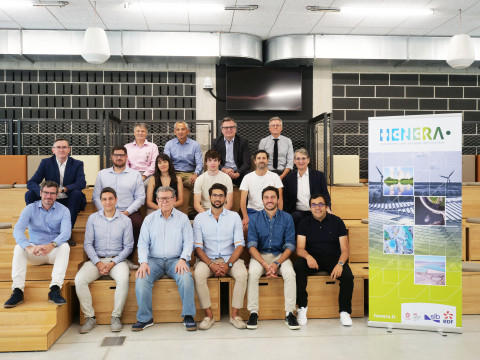
Led by Montpellier BIC and its partners EDF and SLB, the HENERA incubator supports innovative startups involved in low-carbon energy, including generation, storage, distribution, and management.
Projects selected by the incubator benefit from a nine-month program, provided at no cost to participants. It is designed and managed by Montpellier BIC, EDF, and SLB.
The 2024 cohort included three projects:
- E-ETHYLENE designs electrolyzers to produce ethylene from industrial CO2 emissions.
- RENVO is developing a digital platform to give a cost-effective second life to wind farms.
- CELEST.SCIENCE is creating a new generation of artificial intelligence to improve climate forecasting, reduce exposure to climate risks, and help our societies adapt to climate change.
The 2025 cohort features four projects:
- ANARION designs ultra-thin, lightweight, and flexible photovoltaic film that perform as effectively as conventional photovoltaic panels.
- LOOK UP GEOSCIENCE is developing a software solution that facilitates access to subsurface data for exploring low-carbon energy sources, notably geothermal energy and natural hydrogen.
- COLVERT operates battery-based storage systems that require no capital expenditure (CAPEX) by repurposing end-of-life batteries for sites ranging from 1 to 20 MWh.
- ILD·IS ROBOTICS is developing an innovative, autonomous, and robotic solution that optimizes, secures, and protects photovoltaic assets.
-
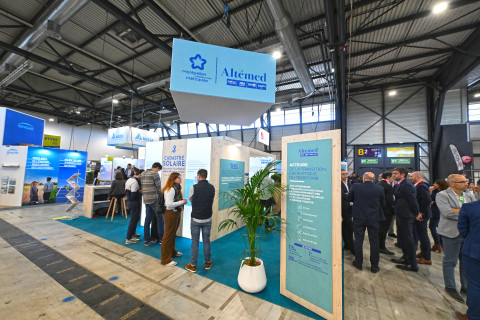
The EnerGaïa Forum is a must-attend event organized by the Occitanie Region for renewable energy professionals. EnerGaïa has been supporting the renewable energy sector for nearly 20 years by offering practical environmental solutions for regions, cities, and industries.
The 2025 event set a new attendance record with 22,600 participants, further cementing its status as an essential international gathering for all stakeholders in the renewable energy sector. With 560 exhibitors and over 102 conferences, roundtables, presentations, and pitches, the event reaffirmed its leading role in the industry.
-
The Metropolitan Area plans to quadruple electricity production from photovoltaic sources by 2030.
Since 2020, Montpellier Métropole and the City of Montpellier have been committed to developing renewable energy as part of their goal to promote energy efficiency and energy sovereignty in the area.
The Solidarity-Based Territorial Climate, Air, and Energy Plan (PCAETs) sets a target for local renewable energy sources to cover 44% of the territory's energy consumption by 2050, with 61% coming from solar power.
Images from the local renewable energy sector
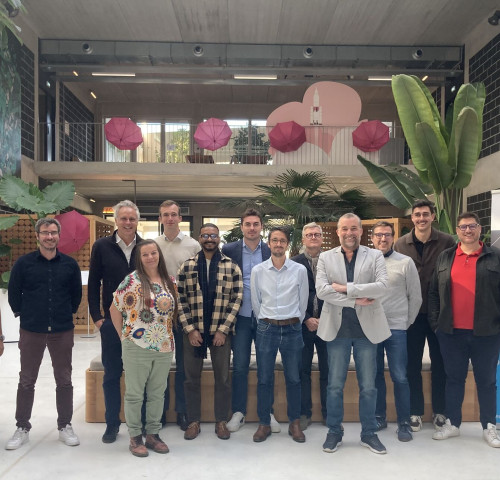
Henera, lancement de la saison 2
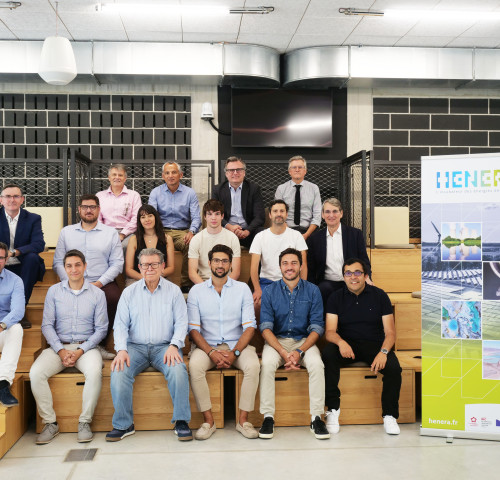
La dernière promotion d'HENERA, l'incubateur des énergies renouvelables