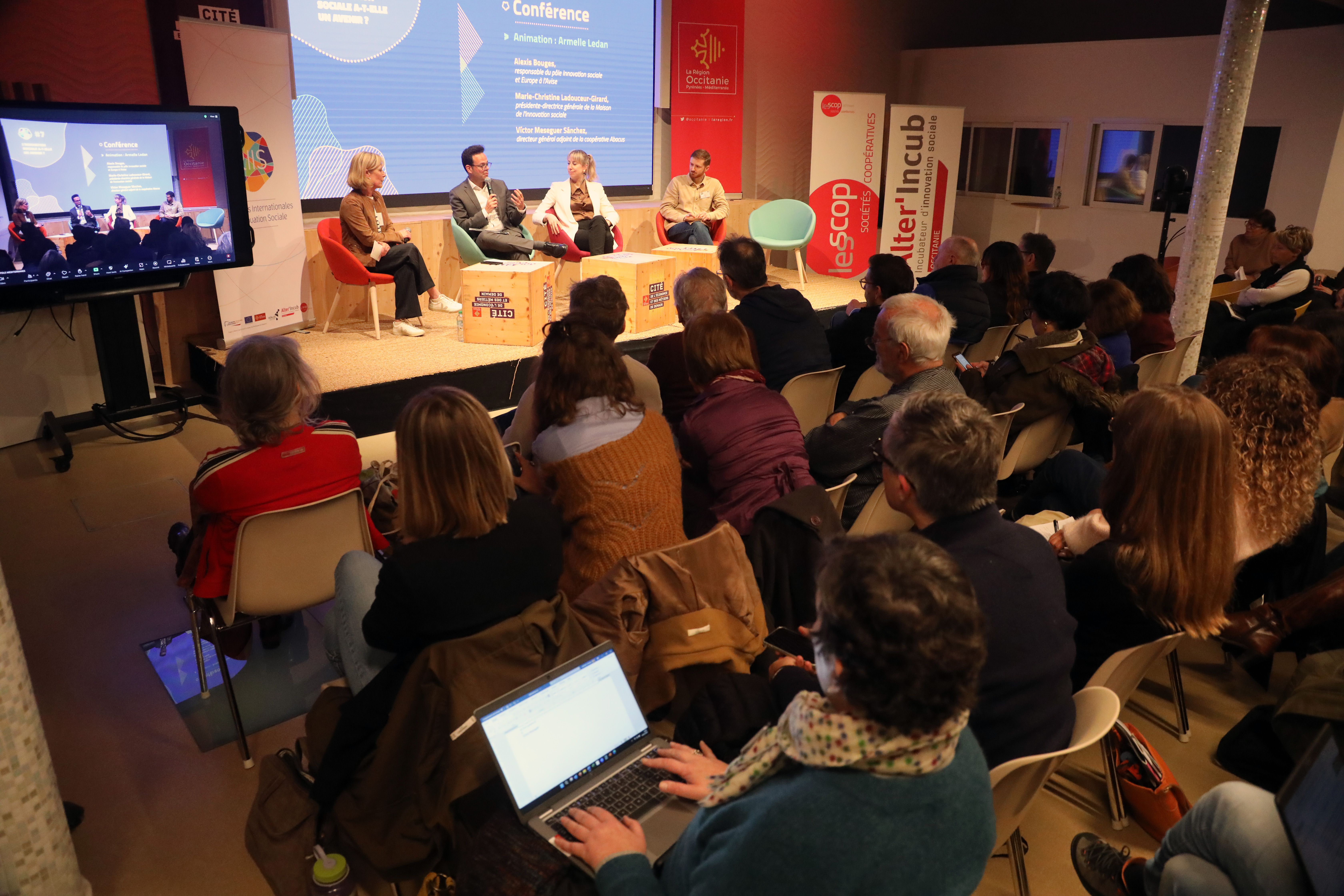
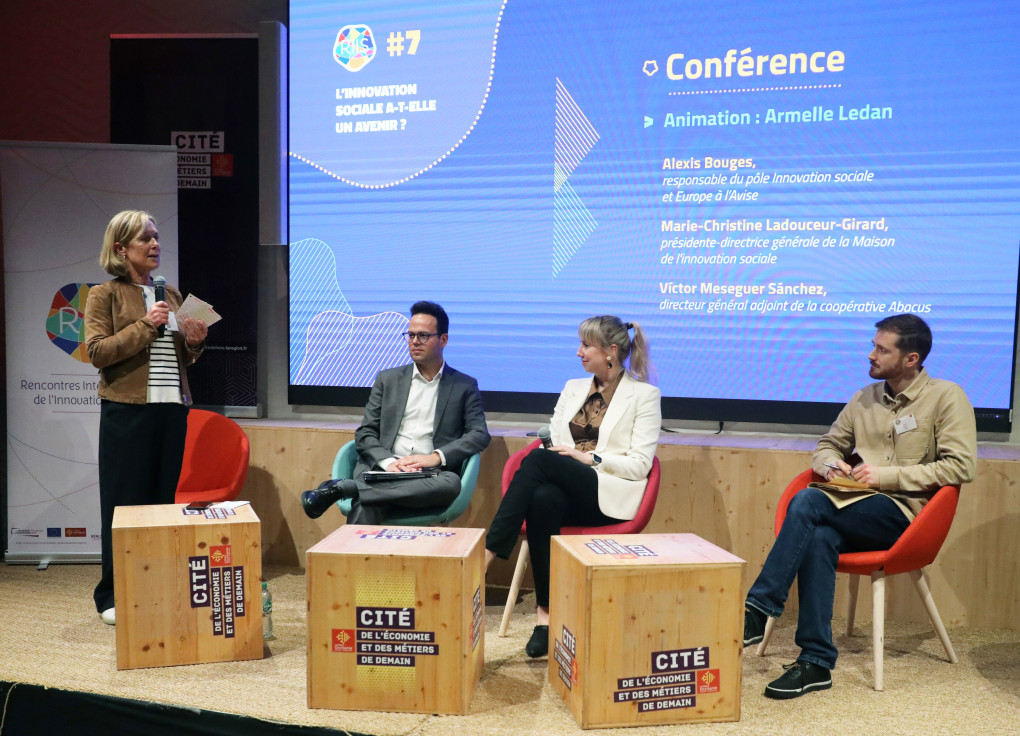
From housing and the ecological crisis to children dropping out of school and areas with zero unemployment, the 7th edition of the International Conference on Social Innovation, organized by the Regional Union of SCOP cooperative companies - Mediterranean Cluster and the Occitanie Region (URSCOP) and the Occitanie/Pyrénées-Méditerranée Region, focused on the future of social innovation at its event held on March 9 at the Cité de l’Économie et des Métiers de Demain in Montpellier.
The question asked was “Does social innovation have a future?” The answer was clearly yes. At a time when economic, social, and environmental transitions are forcing societies to transform, social innovation is fueling the entrepreneurial landscape by stimulating the development of the Social and Solidarity Economy (SSE).
The French example is particularly emblematic in this regard. Since the country's Law on the Social and Solidarity Economy was passed on July 31, 2014, the number of incubators dedicated to the Social and Solidarity Economy has continued to rise, reaching 130 — that is, as many organizations aimed at supporting project leaders who create new solutions to address economic, social, or environmental needs that are not being adequately met or remain unmet.
“We are witnessing the emergence of a professional field dedicated to providing support and assessment,” observes Delphine Vallade, a professor and researcher at Paul-Valéry Montpellier 3 University. As a result, no fewer than 540 support specialists assist project leaders in France, thereby helping to strengthen the social and solidarity economy sector and promote the socio-economic innovations it generates.
At the same time, regional partnerships continue to develop throughout the country. The Montpellier metropolitan area provides a shining example of this. Home to Réalis, the first regional incubator dedicated to the Social and Solidarity Economy, the local area comprises a comprehensive and wide-ranging support ecosystem, also backed by Alter’Incub, another incubator serving entrepreneurship in the field of social innovation. What's more, local authorities in the metropolitan area are also getting involved, as demonstrated by the “Zero Long-Term Unemployment Territory” initiative launched in Montpellier/Grabels, which creates jobs that contribute to ecological transition and social cohesion.
Another example presented during this 7th edition of the International Conference on Social Innovation is Mayotte, “where the social and solidarity economy is vital, in a region with 33% unemployment and 15,000 children out of school. “The CRESS Regional Chamber for the Social and Solidarity Economy in Mayotte is, in fact, the largest in France ,” says Hannah Dominique, manager of Habit’Âme. This integration-oriented organization also creates jobs by combating pollution by recycling plastic waste to transform it into construction materials.
Social innovation, a global challenge
Combining international insights with local initiatives, this event demonstrated once again that social crises can be addressed through hybrid models that blend cooperation, the social economy, and local innovation.
Three Master Classes also provided an opportunity to share a global perspective on social innovation. Discussions brought together speakers from Quebec and Spain who offered different perspectives with respect to approaches being taken in France. Another Master Class explored the landscape and future prospects of social innovation on a European level.
Social innovation is a key focus for Montpellier Métropole, which works with partners in the social and solidarity economy such as CRESS, URSCOP, Crealead, AIRDIE, and Mouvement Impact France, to strengthen its efforts on environmental and social issues. The Montpellier Métropole area accounts for 28,330 salaried jobs in the social and solidarity economy, distributed across 2,148 employers. The social and solidarity economy represents more than 10% of overall employment in the Hérault department, which ranks second in Occitanie in this regard.